
Shanghai Herolift has designed and built vacuum lifting equipment since 2006. The range is certified to CE standard EN 13155:2003 (certificate 1975120112) and manufactured under an ISO 9001 quality system, with a CNEX-certified explosion-proof line for classified dust and gas areas. Units are in service across Europe, North America, Australia, East Asia and Africa.
This page maps six industries to the loads they actually handle, and points to the equipment and technical reading that fits each one. If your process is not listed, send the load details and our engineers will specify from the same range.
Food and Beverage
Pharmaceutical
Chemical and Coating
Automotive and Stamping
Airport and Port
Wood, Steel and Glass
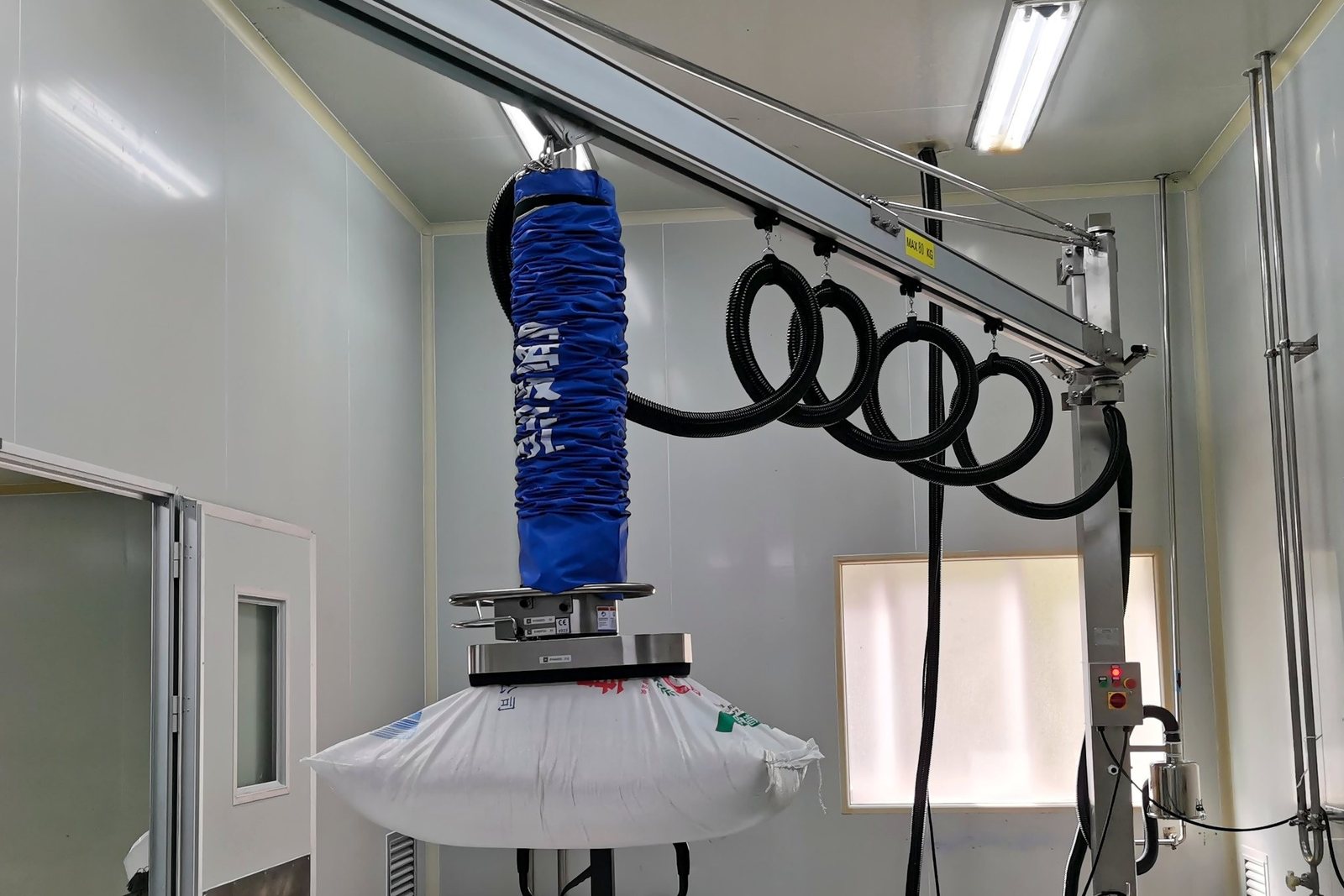
Food and Beverage
Ingredient sacks, big bags and pails are the classic low-headroom problem: heavy, flexible, and impossible to grip with a hook. Vacuum tube lifters grip the bag surface itself, so one operator can move a 25 kg sack or a 1,000 kg big bag without dragging it across the floor.
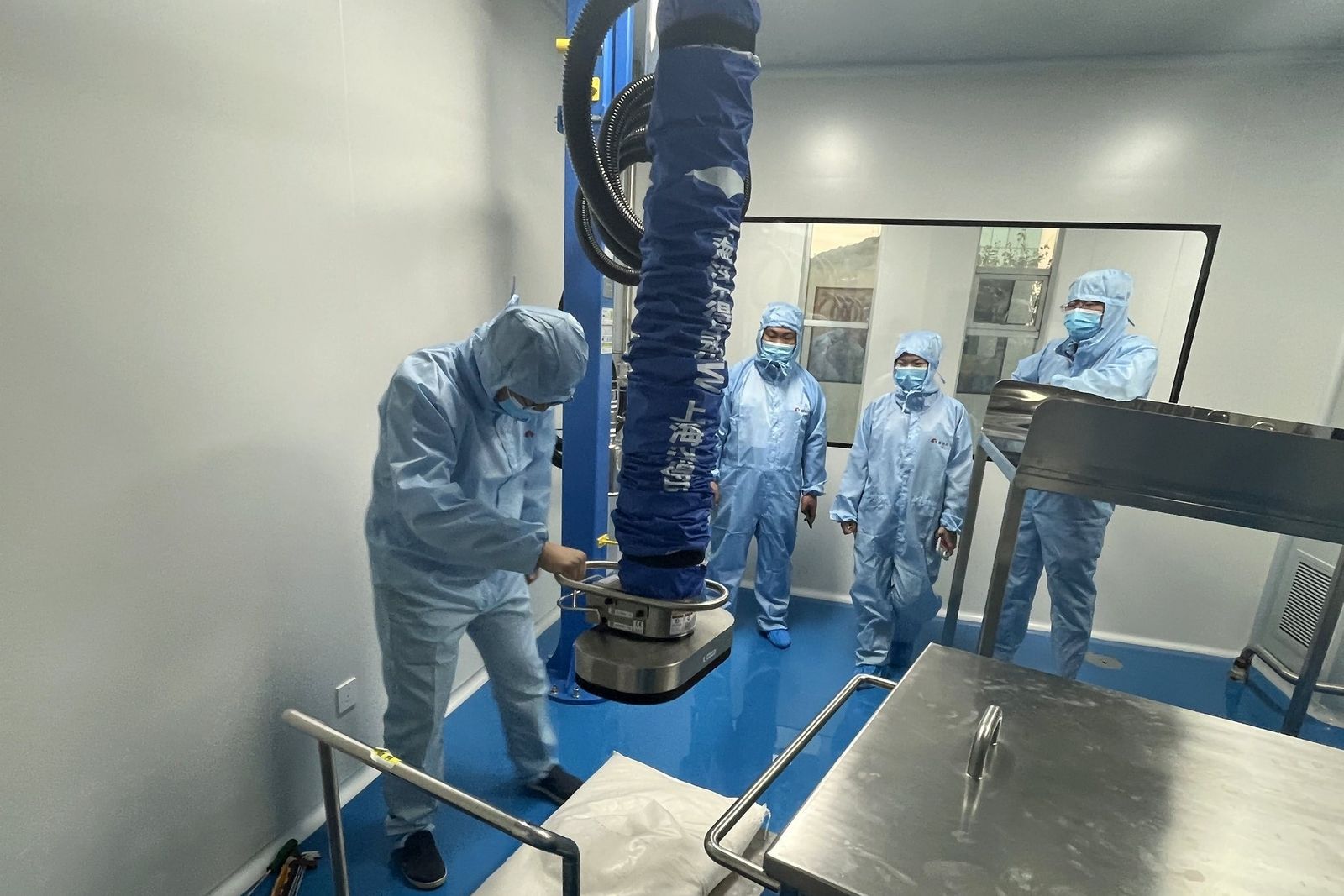
Pharmaceutical and Medical
Cleanroom and GMP areas rule out most mechanical grabs: no hydraulics, minimal particulates, and surfaces that can be wiped down. Vacuum attachment stays on the outside of the container and leaves the product untouched.
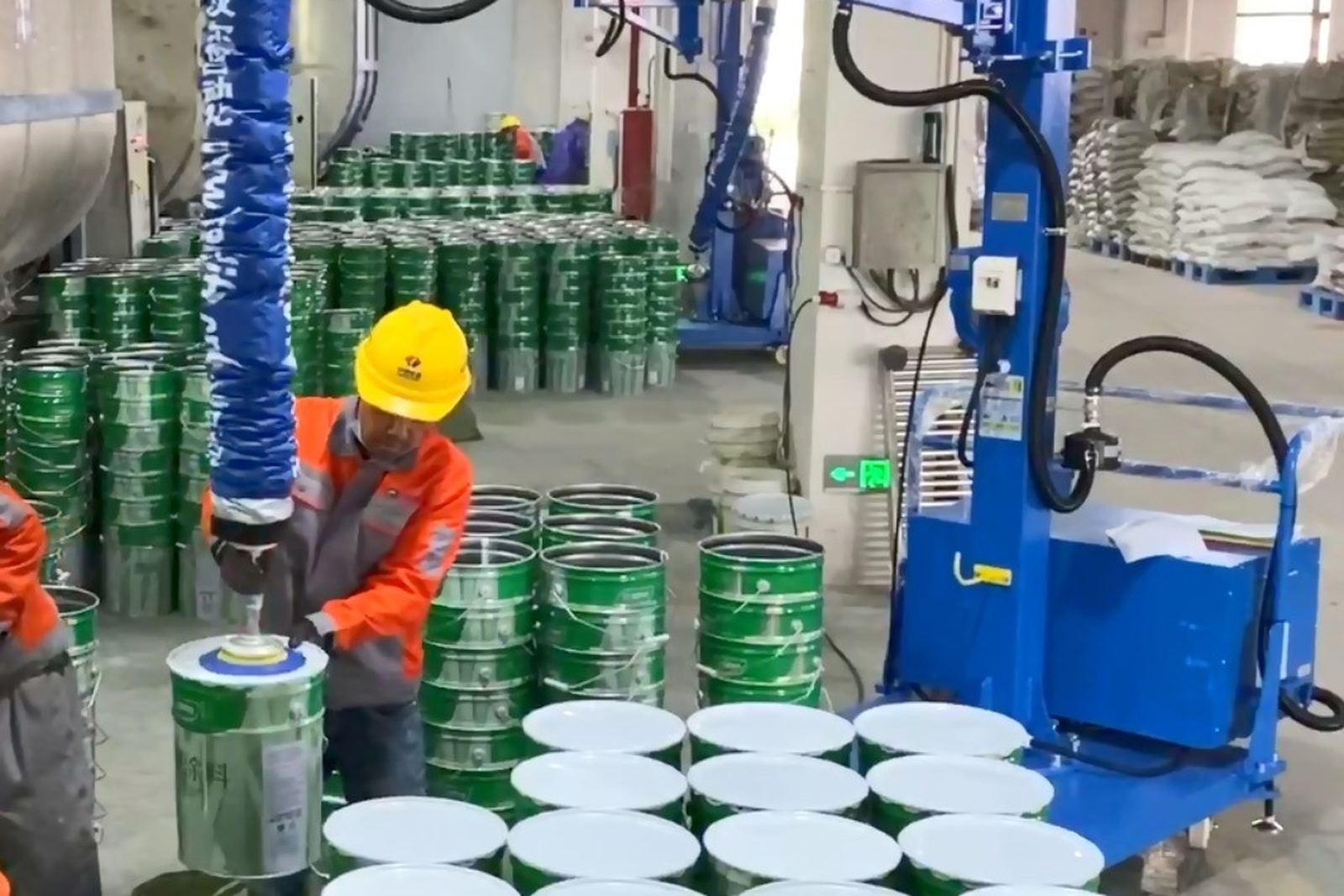
Chemical and Coating
This is the one industry where the equipment choice is decided by the area classification, not by the load. A standard pneumatic lifter removes the electric motor from the beam, but that alone does not make it an explosion-proof unit.
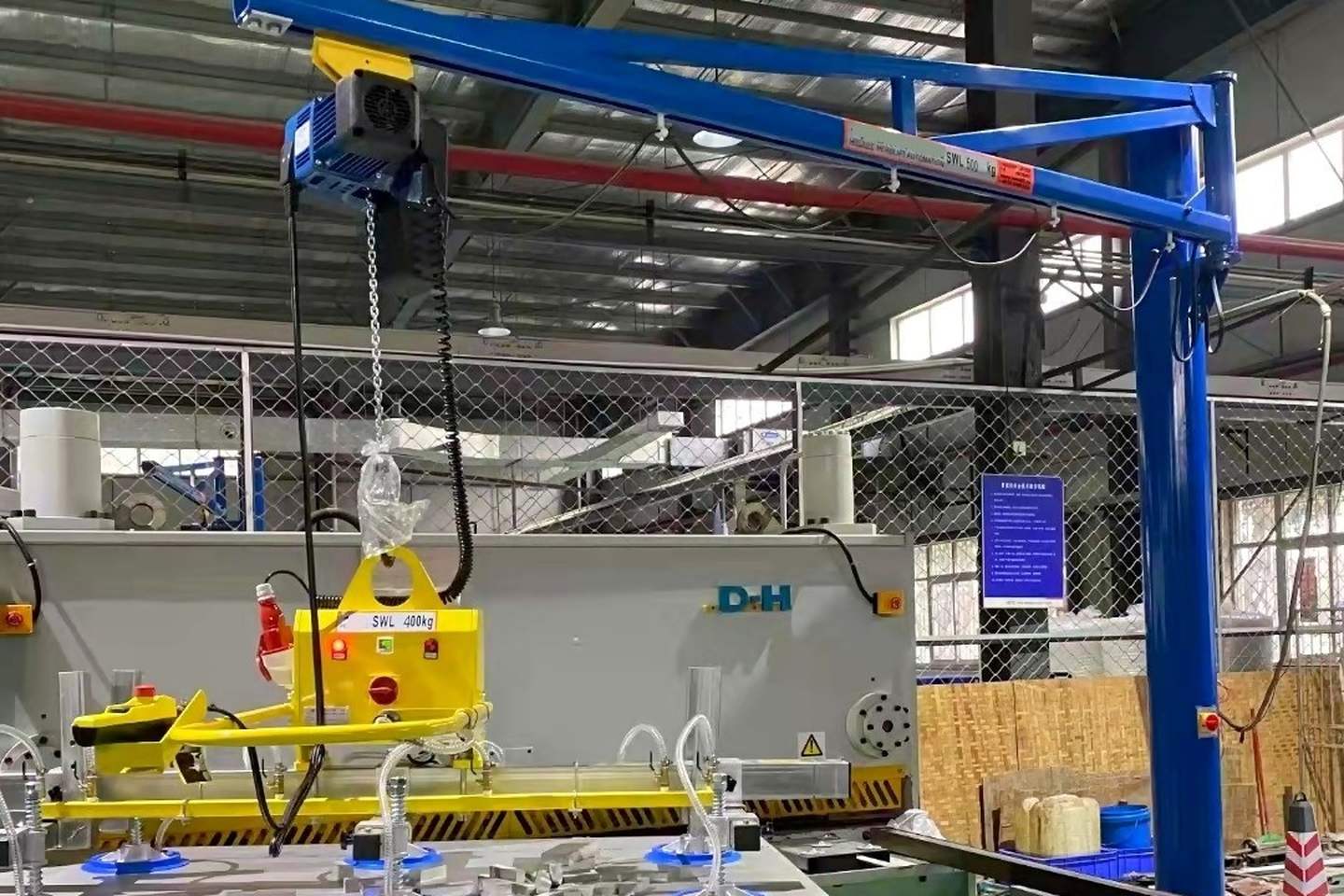
Automotive and Metal Stamping
Press brake and laser feeding is where cycle time beats everything else: the operator needs the sheet flat, square and released in under two seconds. Vacuum handles the full surface, so thin sheet does not deflect the way it does under magnetic or clamp grips.
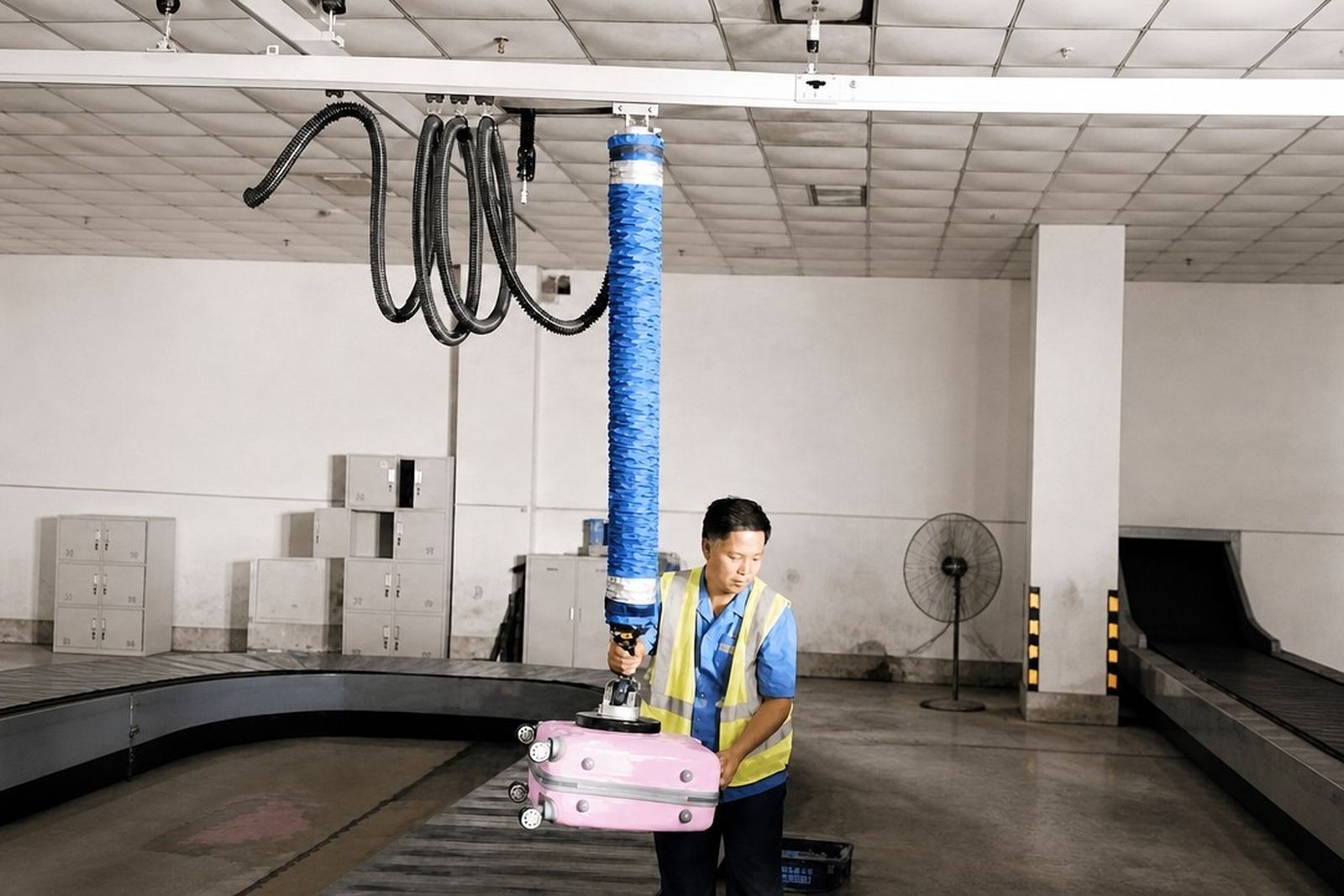
Airport, Port and Logistics
Baggage and parcel handling is a throughput problem with a strict weight ceiling per operator. A tube lifter with a luggage attachment lets one person move a 30 kg case continuously for a full shift without the lift-and-twist that causes back injury.
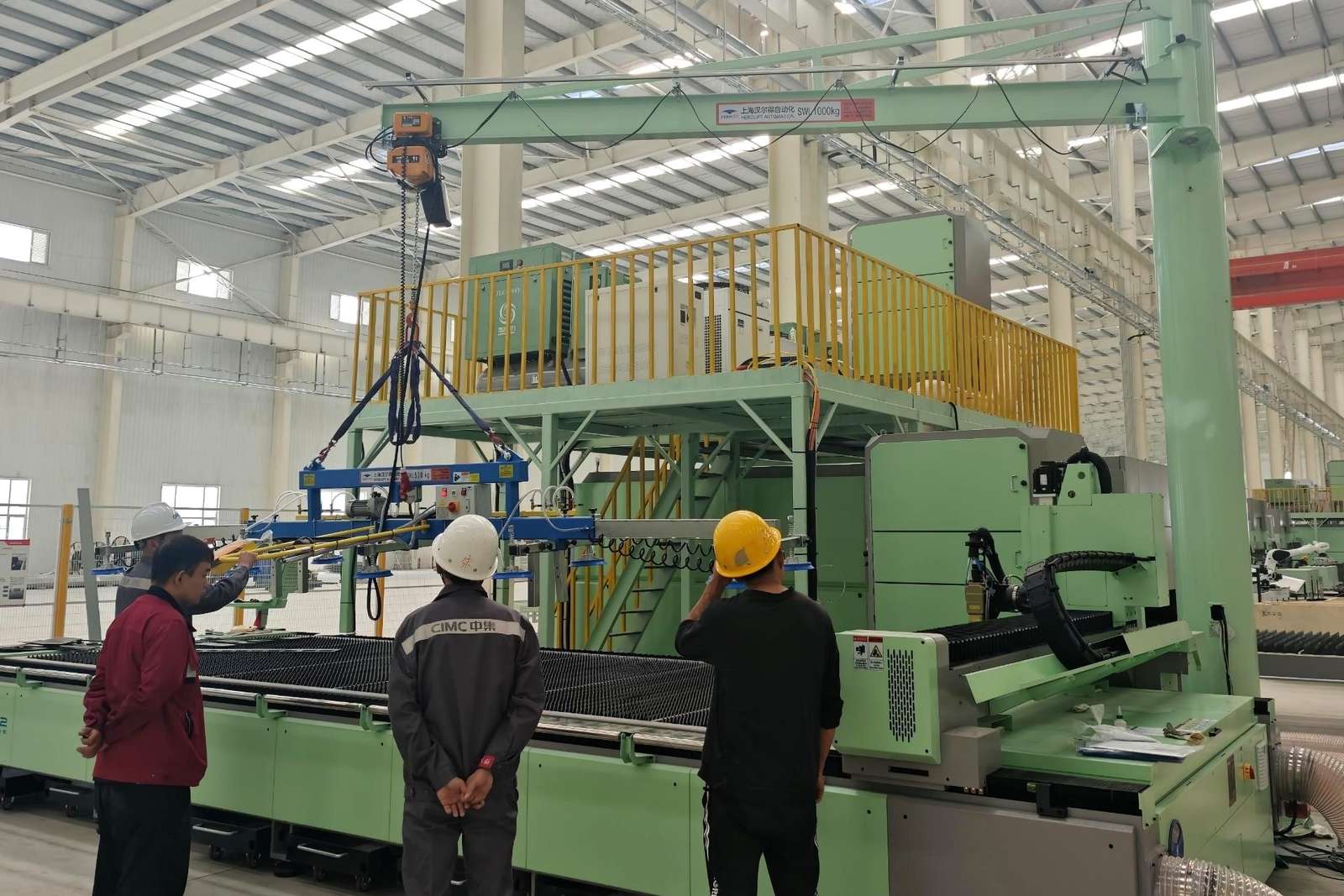
Wood, Steel and Glass
Panels, slabs and glass share one requirement: the face must stay unmarked. Face-contact vacuum pads leave no edge chips, no clamp scratches and no roller marks, which is why they replace mechanical grabs on finished surfaces.
Stone, marble and glass lifter, 300-600 kg
Lifter for large and heavy glass
Industry Comparison at a Glance
The same load range appears in several industries. What changes is the drive, the pad material and the certification.
| Industry | Typical load range | Drive options | Starting point |
|---|---|---|---|
| Food and beverage | 10-300 kg (big bags to 1,000 kg) | Electric blower, compressed air | VEL tube lifter |
| Pharmaceutical and medical | 10-300 kg | Electric blower, stainless execution | VEL tube lifter |
| Chemical and coating | 15-500 kg | Compressed air, CNEX explosion-proof | Explosion-proof tube lifter |
| Automotive and stamping | 250-1,500 kg | Electric vacuum pump, compressed air | BLA sheet lifter |
| Airport, port and logistics | 10-300 kg | Electric blower, battery 12 V DC | VEL tube lifter |
| Wood, steel and glass | 100-3,000 kg; heavier with HL to 26,000 kg | Electric, battery, compressed air | BLA / BLC / GLA |
What to Send Us Before We Quote
Three numbers decide the model, the pad count and the safety margin. Without them any quotation is a guess:
-
1
Load per lift. Single unit weight and the heaviest piece you will ever handle, not the average. -
2
Surface and thickness. Material, thickness range and whether the surface is sealed. Porous or rough faces leak air and will not hold vacuum. -
3
Lift geometry. Sheet or panel dimensions, maximum overhang beyond the outer pads, and the headroom under your crane or ceiling.